
 New Horizons
 Project Management Academy
 Six Sigma Online
 TCM Security
 TRACOM
 Velopi
 Watermark Learning
 Login
Login


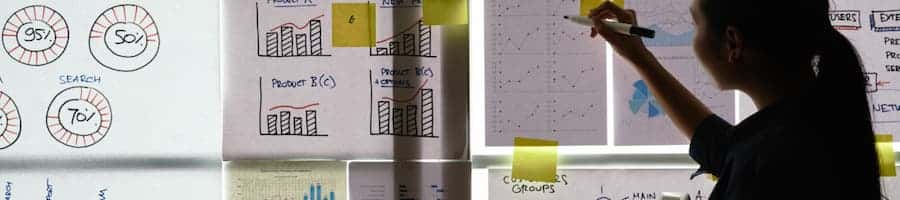
When a large consumer goods company set out to update its supply chain systems, teams hit a familiar roadblock. The IT group wanted Agile sprints for flexibility. The compliance department needed documentation-heavy Waterfall. The project stalled—until a hybrid approach brought it all together.
Hybrid project management—blending Agile and Waterfall—isn’t a compromise. It’s a strategic response to the complexity organizations face when juggling changing demands, competing priorities, and cross-functional teams.
But process alone won’t make hybrid project management work. Without the right leadership, coordination, and tools in place, even the best-designed approach can break down. Here’s how to make hybrid project management succeed—by supporting it with the right structure and the right skills.
Key Takeaways
Hybrid project management isn’t a compromise—it’s a strategy.
Combining Agile and Waterfall allows organizations to tailor delivery methods to specific project needs, improving both flexibility and control.
Success depends on leadership, training, and coordination—not just process.
Hybrid models only work when teams are aligned, communication is clear, and project managers understand both methodologies.
Hybrid-ready teams require continuous learning.
Developing fluency in Agile and Waterfall, along with the tools and soft skills to move between them, is essential for successful execution in complex environments.
Why Use Hybrid Project Management
Today’s business problems are rarely straightforward. Some projects demand speed and flexibility; others require structure and predictability. Relying solely on either Agile or Waterfall often creates gaps that slow teams down or leave critical elements unmanaged.
That’s why many organizations are turning to hybrid project management. This approach allows you to utilize the best of both, depending on the task at hand. According to the Project Management Institute’s 15th Annual Pulse of the Profession report, adoption of hybrid frameworks has surged by 57.5% over the past three years, rising from 20% in 2020 to 31.5% in 2023. That growth signals a broader recognition that no single method can meet all the demands of today’s projects. A separate study from PM Solutions confirms this upward trend, reporting that 37% of organizations used hybrid approaches in 2024, up from just 22% in 2018.
Hybrid project management opens the door to flexibility and control—but only if your teams know how to apply the right approach at the right time. To achieve this, you need practical strategies that demonstrate where Agile and Waterfall methodologies each fit. Let’s explore how to make that work.
Making Hybrid Project Management Work
Getting hybrid project management right isn’t about randomly merging two methods. It’s about designing a structure that fits the work and the needs of your team. That means choosing when to be flexible, when to follow a defined path, and how to make both approaches mutually supportive.
Start by understanding what each part of your project requires:
- Use Waterfall for infrastructure, legal compliance, or areas with clearly defined outcomes.
- Use Agile for customer-facing features, feedback-driven updates, or when requirements are likely to evolve.
You might use a sequential model, planning in a Waterfall approach and executing in an Agile approach, or a parallel model, where different teams follow different approaches.

For any hybrid structure to work, alignment is key:
- Communication must flow clearly between technical and business roles.
- Project managers should be proficient in both Agile and Waterfall project management methods.
- Teams need tools that provide visibility into both short-term progress and long-term goals.
When done right, hybrid project management brings clarity to complex work. But even the best structure can fall apart if teams aren’t equipped to support it. Let’s take a closer look at what happens when that foundation starts to slip.
Hybrid Project Management Challenges to Avoid
Here’s the reality: most hybrid projects that fail don’t collapse because of bad technology or flawed processes. They stumble because teams hit predictable human challenges that no one saw coming. The good news? These failure patterns are avoidable once you know what to watch for.
- The Methodology Muddle: Teams often struggle to determine which approach to use. Create a clear matrix that shows which components follow Agile versus Waterfall methodologies.
- The Handoff Black Hole: Work gets lost transitioning between methodologies. Build buffer time and assign a “bridge person” who understands both approaches.
- The Reporting Nightmare: Conflicting metrics create confusion about project health. Establish unified success metrics focused on business outcomes.
- The Culture Clash: Teams develop an “us versus them” mentality. Use cross-training and shared goals that require collaboration.
Most hybrid project failures aren’t technical—they’re human. Clear guidelines and mutual understanding make the difference between success and frustration.
However, even the best processes can break down if teams lack the skills to navigate between methodologies seamlessly. That’s why avoiding these failure patterns requires more than just good planning—it requires teams that can adapt, communicate, and execute across different frameworks. And that kind of versatility doesn’t happen overnight.
Why Your Team Needs Hybrid Project Management Training
Hybrid project management demands more than knowing how to run a sprint or write a project charter. Teams need to shift between frameworks, collaborate across departments, and work comfortably with a variety of tools. That kind of adaptability doesn’t happen on its own—it has to be developed over time.
PM Solutions found that organizations experienced a 10% increase in their ability to utilize adaptive and hybrid approaches—a clear indication that investment in learning and development directly translates into stronger execution.
How Continuous Learning Builds Hybrid-Ready Teams
Teams that thrive in hybrid environments typically share one key trait: they’re constantly learning. They understand both Agile and traditional approaches, can navigate across tools, and know how to adjust their tactics as the project evolves.
Ongoing learning also helps teams stay ahead of common breakdowns. Whether it’s a manager deepening their Agile fluency, a developer contributing to a fixed-scope initiative, or a team streamlining their collaboration, training closes the gaps that would otherwise slow down progress.
When learning is part of the culture, hybrid methods feel natural. So, what does this look like in practice? Let’s walk through a couple of real-world examples.
Hybrid Project Management Examples
Theory is one thing—results are another. When organizations move beyond textbook examples and tailor hybrid approaches to their specific challenges, something powerful happens. Teams discover they can capture Agile’s flexibility without sacrificing Waterfall’s structure, delivering outcomes that neither methodology could achieve alone. Here’s how it works in practice:
Healthcare Patient Portal
- The challenge: Balancing rapid feature development with strict HIPAA compliance requirements that couldn’t be compromised
- The approach:
- Development teams used Agile sprints for user features
- Compliance teams followed Waterfall for documentation and approvals
- The result: Faster launch of a secure portal meeting both patient and privacy needs
Financial Services Onboarding
- The challenge: Reducing a complex 3-week onboarding process while maintaining regulatory documentation and risk controls
- The approach:
- Waterfall-mapped workflows and protocols
- Agile teams redesigned the interface and automated processes
- The result: Faster onboarding, higher satisfaction, reduced costs
In both cases, success required more than methodology—it demanded teams skilled in communication and cross-system execution. That kind of adaptability starts with leadership.
Leading Hybrid Project Management Teams
Even with strong processes and modern tools, hybrid projects only succeed with effective leadership. Leaders provide vision, connect the moving parts, and help teams navigate complexity with clarity.
Effective hybrid project leaders:
- Provide strategic clarity and alignment
- Foster trust and open communication
- Coach teams to work across multiple delivery models
- Encourage accountability without micromanagement
Leadership is what keeps hybrid teams aligned when complexity rises. But to bring a hybrid model to life, you also need a plan to get started. Let’s walk through the first steps.
6 Steps to Start Hybrid Project Management
If hybrid project management sounds like a good fit for your organization, the next step is putting it into practice. But shifting to a hybrid model isn’t as simple as flipping a switch. It takes planning, training, and iteration to get it right.
Here are six actionable steps to help you test and scale a hybrid approach that fits your team’s strengths:
- Start with a pilot. Choose a mid-risk project to test and learn without overwhelming your team.
- Assign hybrid-fluent leaders. Select project managers who can navigate both Agile and Waterfall.
- Clarify workflows. Define what follows Agile, what follows Waterfall, and how they intersect.
- Invest in tools. Use platforms that show both sprint progress and milestone timelines.
- Train continuously. Offer learning paths that build skills in both approaches.
- Capture lessons learned. Turn pilot insights into a repeatable model for future projects.
By starting small and iterating, your organization can build confidence and clarity in its hybrid project delivery approach. Before we close, let’s revisit why hybrid project management is more than just a delivery model—it’s a shift in mindset.
Hybrid Project Management Is a Strategy
Hybrid project management isn’t a halfway point—it’s a strategic response to modern complexity. When supported by strong leadership, structured coordination, and evolving skills, teams can stay aligned, adaptable, and effective.
That kind of success requires a long-term commitment to learning. The communication, coordination, and technical skills needed to lead hybrid projects must be developed—and continuously improved. As your work changes, your people should grow alongside it.
Hybrid project management isn’t just a method worth trying—it’s a mindset worth building.
Get the Hybrid Project Management Skills You Need
At Project Management Academy (PMA), we don’t just help professionals earn certifications—we help organizations build the skills their teams need to lead complex projects with confidence.
Whether your team is pursuing PMP®, PMI-ACP®, or looking to strengthen their fluency in both Waterfall and Agile frameworks, our expert-led courses are designed to support real-world execution.
Strengthen your team’s ability to adapt, collaborate, and deliver. Explore PMA’s training options and start building your next generation of hybrid-ready leaders.


 Influencing Without Authority
 (877) 637-0450
 contact@projectmanagementacademy.net
 Mon - Fri | 8:00 AM - 6:00 PM EST


 New Horizons
 Project Management Academy
 Velopi
 Six Sigma Online
 TCM Security
 TRACOM
 Watermark Learning