
 New Horizons
 Project Management Academy
 Six Sigma Online
 TCM Security
 TRACOM
 Velopi
 Watermark Learning
 Login
Login



Key Takeaways
- Small process gaps compound into major project failures.
- Early detection of warning signs prevents costly overruns.
- Clear goals, roles, and communication keep teams aligned.
How Small Project Mistakes Snowball into Big Failures
A cross-functional team kicks off a promising project. Leadership is excited. The budget is approved. Everyone is ready to deliver results. But just a few weeks in, deadlines start slipping. Roles are unclear. Communication breaks down. Tasks get duplicated, and priorities shift without warning. What happened?
70% of projects fail to deliver what was promised. (PM 360 Consultancy Management)
There was no single point of failure. Instead, the project slowly unraveled due to small, common missteps that went unchecked. And it is a familiar story. Many teams struggle not because of significant gaps in leadership or technology, but because their process is misaligned, incomplete, or missing altogether.
This blog walks through the 10 most common project management mistakes that cause trouble, what they look like in practice, and how to stop them before they escalate.
Let’s start by understanding why these mistakes matter more than most people think.
How Project Mistakes Create Hidden Costs and Delays
Project mistakes are not just frustrating, they’re expensive. According to the Project Management Institute (PMI), organizations waste nearly 10 percent of every dollar due to poor project performance. That adds up quickly across a portfolio of projects.
Mistakes in project management often lead to:
- Missed deadlines and budget overruns
- Scope creep that spirals out of control
- Burned-out teams and high turnover
- Frustrated stakeholders with shifting expectations
Even minor issues can escalate quickly if not addressed. The key is to catch problems early and respond with clarity and structure.
And here is the good news: you do not need to eliminate every mistake. Strong project managers need to recognize them early and course-correct quickly.
Mistakes That Derail Teams (and What to Do Instead)
Project managers often face the same recurring problems, such as scope creep, missed handoffs, and unclear goals. These common issues may seem small at first, but they can disrupt even the strongest teams. Here are ten to watch for, and how to prevent them.
1. Skipping the Planning Phase
- The trap: “We’ll figure it out as we go.”
- Why it fails: Without a roadmap, teams miss dependencies and deadlines.
- How to avoid it: Clarify scope, timeline, roles, and risks before work begins.
2. Vague or Shifting Project Goals
- The trap: Starting without a clear definition of success.
- Why it fails: Teams cannot aim for a goal they cannot see.
- How to avoid it: Align with stakeholders on specific, measurable outcomes.
3. Poor Stakeholder Communication
- The trap: Only sending updates when things go wrong.
- Why it fails: Creates distrust and unnecessary escalations.
- How to avoid it: Set up regular update cycles and agreed communication channels.
4. Lack of Defined Roles and Responsibilities
- The trap: “Everyone will pitch in as needed.”
- Why it fails: Causes overlap, confusion, and dropped tasks.
- How to avoid it: Use a RACI matrix or a similar tool to assign ownership.
5. Scope Creep Without Change Control
- The trap: Saying “yes” to every new request.
- Why it fails: Blows up timelines, costs, and quality.
- How to avoid it: Use formal change request processes to evaluate and approve new work.
6. No Risk Management Strategy
- The trap: Assuming everything will go smoothly.
- Why it fails: Teams get blindsided by foreseeable issues.
- How to avoid it: Identify risks early and build contingency plans.
7. Overloading or Underusing the Team
- The trap: Assuming people will speak up if overloaded or underutilized.
- Why it fails: Leads to burnout or disengagement.
- How to avoid it: Monitor workloads and rebalance regularly.
8. Failing to Manage Expectations
- The trap: Overpromising early to win support.
- Why it fails: Stakeholders feel let down when reality hits.
- How to avoid it: Be transparent about trade-offs, risks, and what success will look like.
9. Not Using the Right Tools or Systems
- The trap: Managing the project through emails and memory.
- Why it fails: Information gets lost, and accountability disappears.
- How to avoid it: Use a system that fits your team’s size, workflow, and reporting needs to maintain consistency and clarity.
10. Ignoring Lessons Learned
- The trap: Wrapping up and moving on without reflection.
- Why it fails: Teams repeat the same mistakes in future projects.
- How to avoid it: Hold a retrospective and document key takeaways after every project.
Even small mistakes rarely stay that way. Projects begin to drift when minor issues are overlooked or dismissed. The sooner you spot signs of trouble, the easier it is to get things back on track.
How to Spot Project Trouble Before It’s Too Late
When project management mistakes start creeping in, they rarely announce themselves loudly. Instead, they show up as subtle signs that something is off. A confused team. A missed deadline. An awkward check-in where no one seems sure what to prioritize. Spotting early warning signs helps you catch small issues before they become big problems.
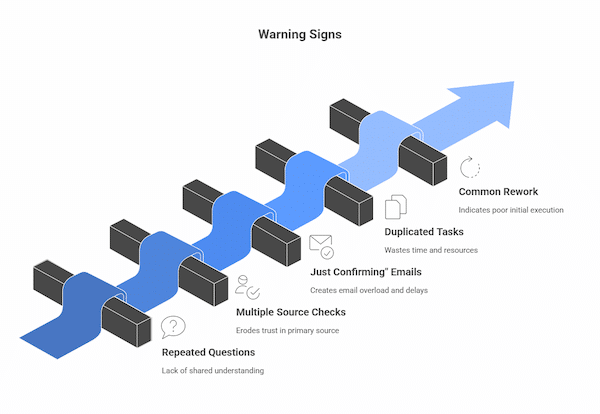
Examples of early warning signs include:
- Team members repeatedly ask the same questions
- People check with multiple sources before acting
- Stakeholders send “just to confirm” emails often
- Tasks are being duplicated or worked on in conflict
- Rework is common, especially in the later stages
- Deadlines are missed with vague or unclear reasons
- Frustration surfaces in private chats or survey feedback
- Decisions get revisited over and over with no resolution
When these signs appear, it is time to step back, reassess, and re-anchor your project team. Fortunately, even small changes can support project recovery before things spiral out of control. A few fast, focused actions can help you regain control and rebuild alignment.
3 Fast Project Fixes to Get Your Team Back on Track
If your project is already showing signs of trouble, it can feel overwhelming to figure out where to start. But progress does not always require a complete overhaul. Small, well-targeted actions can help stabilize your team and rebuild alignment. Here are three quick fixes you can use to reduce risk, improve communication, and restore momentum with minimal disruption.
According to research, projects using formal PM practices are up to 2.5 times more likely to succeed, measured by delivering on time, within scope, and meeting business objectives.
1. Create a One-Page Project Charter
- Define purpose, success criteria, stakeholders, and constraints
- Share with your team and confirm alignment
- Time required: 2 to 3 hours
2. Launch a 15-Minute Weekly Team Check-In
- Ask: What is complete? What is blocked? What matters next week?
- Keep it short and use it for coordination, not status reporting
- Time required: 15 minutes per week
3. Start a Simple Risk Register
- Identify your top five risks and list one mitigation for each
- Review and update it weekly
- Time required: 30 minutes to start, 5 minutes weekly
Small, focused actions like these can spark immediate clarity and restore momentum. With even a little consistency, they become the starting point for lasting improvement.
How to Measure Project Management Improvement
Once you start applying stronger project management practices, the next step is to determine whether they are effective. That is where performance metrics come in. Key Performance Indicators (KPIs) act like a project health check. They help you monitor progress, identify weak spots, and make data-informed adjustments. Here are three practical KPIs that show whether your planning, communication, and team alignment efforts are paying off.
1. Planning Accuracy Rate
- What to measure: Percentage of milestones delivered on schedule
- Target: 80 percent or higher for established teams
- Helps you gauge the realism of your planning
2. Scope Change Frequency
- What to measure: Approved scope changes per month
- Target: Fewer than one significant change per month
- Indicates strength of initial scoping and stakeholder alignment
3. Team Clarity Index
- What to measure: Weekly survey asking, “I understand my priorities and responsibilities” (1–5 scale)
- Target: Average score above 4.0
- Helps identify confusion or communication breakdowns before they become serious
Tracking these KPIs gives you early insight into how your team is performing and where adjustments are needed. But even the best metrics will not help if your team lacks the systems and habits to stay consistent. That is where tools, routines, and structure make the difference.
Tools and Habits That Prevent Repeat Mistakes
Even the best project managers cannot prevent every mistake. What they do well is build a system that helps catch issues early and prevents repeat problems. The right tools are important, but consistent team habits are what make them work. Here are some of the core tools and simple routines that help teams stay structured, balanced, and focused without adding complexity.
- Documentation tools: For project charters, risk registers, and change logs
- Communication plans: Include cadence, format, and channels
- Workload visibility: Use dashboards or boards to prevent overload
- Templates and checklists: Standardize repeatable processes
- Retrospectives: Build a culture of continuous improvement
With the right habits and a few well-chosen tools, teams can avoid repeating common mistakes and stay focused on what matters. The goal is not perfection, it is steady improvement grounded in clear structure, consistent communication, and lessons that stick.
Why Great Project Managers Learn, Adapt, and Improve
Even experienced project managers slip up now and then. What separates the best from the rest is how quickly they adjust, realign their teams, and prevent the same issue from happening again.
That is why strong process skills are not optional. They provide the structure that turns technology and leadership into results. Without them, even well-led, well-equipped teams can falter.
Want to equip your team with the skills to stay on track?
Discover your team’s advantage with expert-led training from Project Management Academy.


 Influencing Without Authority
 (877) 637-0450
 contact@projectmanagementacademy.net
 Mon - Fri | 8:00 AM - 6:00 PM EST


 New Horizons
 Project Management Academy
 Velopi
 Six Sigma Online
 TCM Security
 TRACOM
 Watermark Learning