
 New Horizons
 Project Management Academy
 Six Sigma Online
 TCM Security
 TRACOM
 Velopi
 Watermark Learning
 Login



Key Takeaways
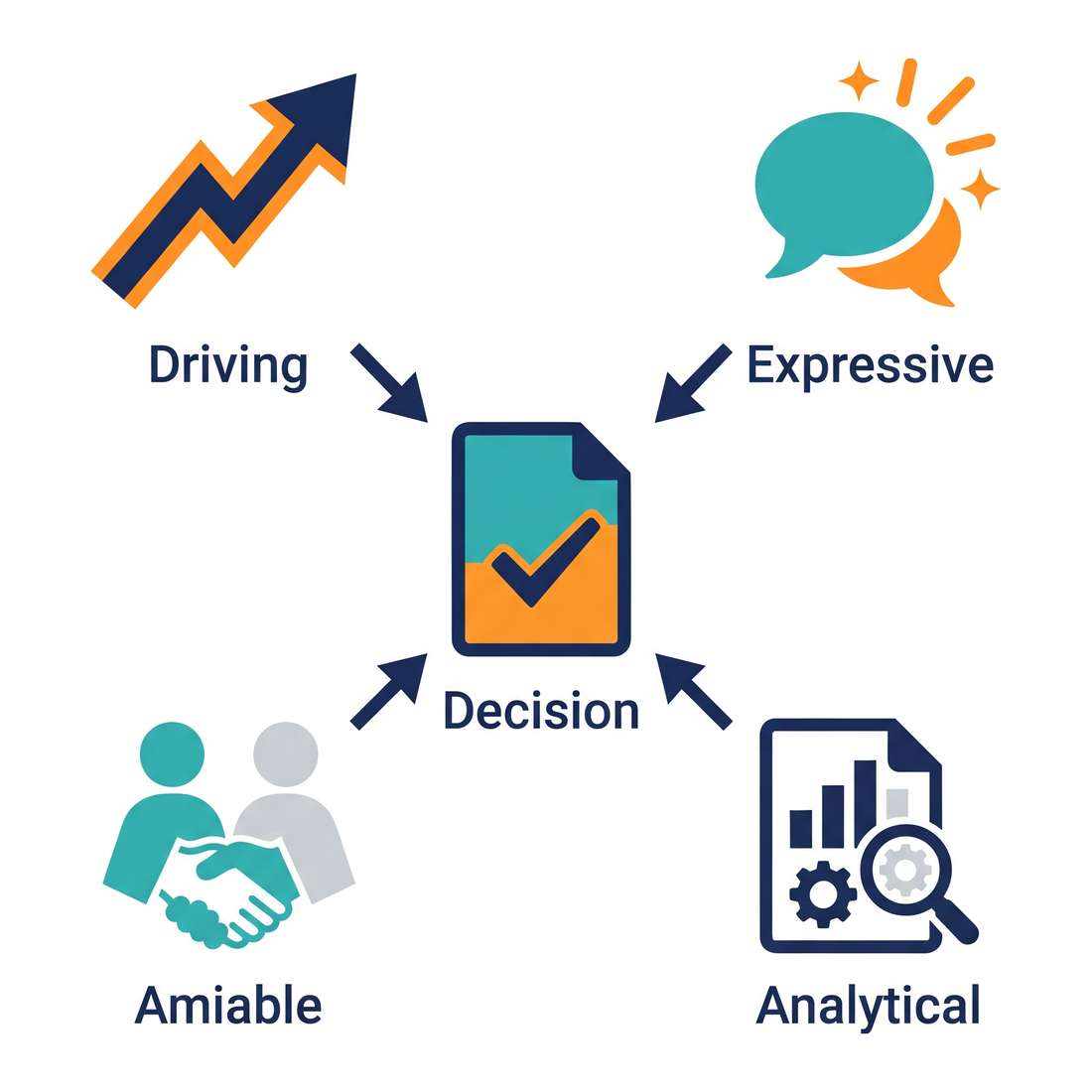
- Driving Style Sponsors: Lead with a clear recommendation before opening discussion
- Expressive Style Sponsors: Acknowledge the ideas raised, then narrow to one choice
- Amiable Style Sponsors: Ask directly and privately for concerns they won’t volunteer
- Analytical Style Sponsors: Bound their need for evidence with a firm deadline
- Anchor the Decision: Turn verbal agreement into a written, anchored decision record
The milestone meeting ended with what looked like a decision. A week later, the sponsor reopened it. Scope was the sticking point: the team assumed it was locked, the sponsor thought it was still open, and nothing in the meeting signaled there was a gap in understanding. As a result, the milestone was back at risk.
This pattern repeats often enough that PMs usually attribute it to a difficult sponsor.
A more useful explanation is that under pressure, a PM leans harder on their own natural communication style. The default script that results doesn’t land the same way with every sponsor.
What reads as agreement to one person can read as an open question to another.
One milestone and scope call plays out against four sponsor patterns: Driving Style, Expressive Style, Amiable Style, and Analytical Style. Each one calls for a different way of securing the same decision. The standard for turning any of those four conversations into something the team can execute is the same regardless of style.
Stop Diagnosing Sponsors as Difficult
Under pressure, a PM leans harder on their own natural communication style. This default script becomes the fallback for every decision conversation, regardless of who’s on the other side of it, and it’s usually the wrong fit for at least some of the sponsors involved. Applying the same script to every sponsor ignores how differently each one processes a decision.
The stakes are real. PMI’s 2026 Pulse of the Profession found that high-performing project teams secure sponsor alignment at initiation more often than low performers, 40% versus 30%. A default script that doesn’t match the sponsor in front of you makes that alignment harder to reach.
One framework to close the gap comes from TRACOM®’s SOCIAL STYLE model. SOCIAL STYLE® describes a comfort zone instead of a fixed box, built on two observable dimensions: assertiveness, how much someone tends to ask versus tell, and responsiveness, how controlled versus expressive their behavior appears.
In practice, more controlled behavior often appears task-focused, while more expressive behavior often appears relationship-focused. Those tendencies help a PM recognize how responsiveness shows up in a decision conversation. Within that model, Versatility is the skill of adapting your own behavior to match another person’s observable pattern, instead of expecting them to adapt to yours.
This skill has a measurable payoff. TRACOM®’s Managerial Success Study found that managers with higher Versatility are 27% better at leading teams. The same adaptation that improves day-to-day leadership also applies directly to how a PM asks a sponsor for a decision, starting with the sponsor who wants a decision now.
Recommend First With Driving Style Sponsors
A Driving Style sponsor brings a distinct set of habits to a conversation, and their habits intensify when making a decision. A PM who doesn’t recognize the shift is more likely to misread it as pushback on the plan itself, when it’s usually a reaction to pace.
The Driving Style sits high on assertiveness and leans task-first over people-first, which is what produces the pace and directness a PM feels most under pressure. A few traits to look out for:
- Pace: Moves quickly through a conversation and skips small talk before the ask
- Under pressure: Turns more blunt or controlling, and pushes harder for immediate closure
- The tell: Dismisses careful concerns as overthinking instead of engaging with them
Since this sponsor wants the destination first, the PM should lead with a specific recommendation and a direct yes or no request, over a long list of options to choose from. For example: “My recommendation is to reduce scope and protect the date. Can you approve that direction today?”
Trust with this sponsor type comes from solid work behind the recommendation. When the PM works through legitimate challenge before the ask, speed becomes an asset instead of a shortcut.
Redirect Expressive Style Sponsors Early
An Expressive Style sponsor fills a conversation with ideas and energy instead of a single fixed position. This energy is an asset in most meetings, but it changes what a PM needs to do when the conversation turns to a decision.
Under pressure, their shift is easy to misread as agreement. What looks like a yes may not represent the settled commitment a PM can build a plan on.
High assertiveness and a people-first lean define Expressive Style, producing the energy and fast agreement a PM can mistake for commitment.
Here’s how that shows up:
- Pace: Generates ideas quickly and jumps between possibilities without settling on one
- Under pressure: Turns more scattered, or defensive if pushed too hard toward closure
- The tell: A fast, energetic yes that sounds like commitment but hasn’t settled anything
Getting the sponsor from enthusiasm to a real decision takes a different approach. Because the sponsor’s energy tends to outrun the decision itself, the PM has to acknowledge the ideas raised, then deliberately narrow to the decision at hand, then confirm what was chosen. In practice, that narrowing can sound like this: “Of the options we’ve discussed, which one gets us the best outcome without moving the milestone?”
Narrowing the sponsor down to one choice is what closes the loop. Each acknowledgment should point toward that choice, giving the sponsor a real chance to commit instead of another idea to consider.
Ask Amiable Style Sponsors Directly
In a conversation, an Amiable Style sponsor leans toward keeping the peace over speaking up. The instinct shows up in a group setting, where raising a concern out loud risks disrupting the tone everyone else seems to be maintaining. It doesn’t disappear once a decision needs to be made.
What looks like passivity in Amiable Style is low assertiveness paired with a people-first lean, producing the quiet agreement a PM can mistake for buy-in.
A few things give it away:
- Presence: Agreeable on the surface and avoids friction, even when a concern exists
- Under pressure: Tends to acquiesce or go quiet instead of raising an objection out loud
- The tell: Silence or agreement in a group setting that isn’t the same as actual buy-in
A direct approach cuts through the silence. Because reservations rarely surface on their own, the PM asks privately, and asks specifically, about concerns that haven’t been voiced yet. In a private follow-up, the ask might sound like this: “Before we commit, what effect do you think this will have on the team, and what haven’t we talked about yet?”
The point of asking them privately is to give them the room to provide their honest answer, not a pressured one. If pressed too hard, the sponsor provides an answer to avoid friction.
Set a Deadline for Analytical Style Sponsors
Ask an Analytical Style sponsor a question, and they treat it as a step toward an answer, instead of a stall tactic. They tend to hold multiple threads at once, weighing tradeoffs before committing to any single path. A PM who pushes for a quick answer here usually gets the opposite result.
This sponsor’s low assertiveness and task-first lean, the hallmarks of Analytical Style, show up as caution before a commitment instead of eagerness to make one. A PM can easily mistake that caution for stalling.
These tells make this pattern recognizable:
- Approach: Methodical and data-focused, with a steady stream of questions before any conclusion
- Under pressure: Tends to withdraw or go quiet before committing without sufficient evidence
- The tell: Questions that read as stalling but are usually a genuine need for more information
A structured ask moves this toward a decision. Because this sponsor needs a clear evidence threshold, the PM leads with current assumptions and tradeoffs, then asks what’s still needed, bounded by a deadline. The boundary can sound like this: “Here are the tradeoffs and the open unknowns. What remaining evidence do you need to choose between these options by Thursday?”
A deadline creates a path to a decision by bounding the sponsor’s search for evidence, since no amount of evidence removes every risk.
Turn Agreement Into Executable Decisions
Milestone meetings can end with the appearance of a decision. Nods around the table, a plan everyone seems to agree to. Agreement, commitment, and an executable decision don’t automatically match up, and a PM who treats them as the same thing is usually the one back in this meeting a week later.
Versatility helps close the interpersonal gap. A consistent decision record is what turns agreement into something the team can execute, regardless of sponsor style.
An anchored decision shows what the group decided, what’s unresolved, the assumptions behind it, who owns the next action, when it’s due, and what would justify reopening it. Having this record on hand helps with a new stakeholder, a shifting deadline, or a sponsor who forgot the specifics.
Confirming the record looks different depending on a person’s communication style:
- Driving Style: A concise outcome-and-action confirmation, stated plainly and without extra explanation
- Expressive Style: The chosen direction separated explicitly from the other ideas, which remain possibilities, not decisions
- Amiable Style: Reservations raised privately before the sponsor’s final commitment, not after the PM records it
- Analytical Style: The evidence and the threshold that justified proceeding, documented alongside the decision itself
In the milestone and scope call, the anchored version turns concrete, with scope reduced to protect the date, the PM as owner of the revised plan, and a Tuesday deadline for that revision.
New client information is the named condition for reopening it, and what remains unresolved is the deferred feature’s place in the next release, which depends on the core integration passing Friday’s test. Anyone who reads it later understands exactly what happened and why.
Make Versatility the Standard
The sponsor and the team left the meeting with different understandings of what had been decided. The PM had relied on a default script, read visible agreement as commitment, and never captured what remained unresolved.
Versatility could have helped expose the issue. Reading a sponsor’s observable behavior and adapting the ask, then anchoring what was agreed, turns apparent agreement into commitment, though it can’t guarantee a decision stays the same as new information or politics shift. It removes the PM’s own default script as the reason it falls apart.
TRACOM®, the creator of SOCIAL STYLE®, partners with organizations to build the interpersonal skill behind reading people and adapting how you communicate, whatever their style.
Project Management Academy works with organizations to develop disciplined frameworks for deciding, documenting, and executing on a project, delivered through instructor-led PMP and CAPM programs.
This skill compounds. A PM who reads sponsors accurately closes meetings cleanly and builds a track record that sponsors trust the next time the team needs a decision.
Which sponsor on your team is still getting your default script instead of the ask they need?
Explore Project Management Academy’s project management training and TRACOM®’s SOCIAL STYLE® programs to build the versatility your next decision depends on.
© The TRACOM Corporation. All Rights Reserved.


 Influencing Without Authority
 (877) 637-0450
 contact@projectmanagementacademy.net
 Mon - Fri | 8:00 AM - 6:00 PM EST


 New Horizons
 Project Management Academy
 Velopi
 Six Sigma Online
 TCM Security
 TRACOM
 Watermark Learning